What does everyday life on the Upper West Side really feel like once the moving boxes are gone? For many buyers, that is the question that matters most. You are not just choosing an address, but a daily rhythm shaped by parks, architecture, culture, and the practical ease of getting through the city. This guide walks you through that rhythm, from morning routines to housing character, so you can picture how the neighborhood may fit your life. Let’s dive in.
For this article, the Upper West Side follows Manhattan Community Board 7: from 59th Street to 110th Street, between Central Park and the Hudson River. That boundary is helpful because it captures the neighborhood most buyers mean when they talk about Upper West Side living.
Within that area, you get one of Manhattan’s largest residential neighborhoods. The NYU Furman Center reports 230,436 residents in 2024, making it the city’s third largest neighborhood by population. It is also a mature, established market that continues to evolve, with thousands of housing units added between 2010 and 2025.
The Upper West Side has a pace that often feels more residential than many other central Manhattan neighborhoods. You still have density, energy, and movement, but the day often unfolds in a way that feels grounded by routine.
A believable weekday starts with outdoor time. On the east side of the neighborhood, Central Park offers easy access for walking, running, or simply starting the day outside. On the west side, Riverside Park brings a different experience, with a layered landscape that steps down toward the Hudson River waterfront.
By late morning and afternoon, daily life often shifts to errands, coffee, lunch, or shopping along Broadway, Columbus Avenue, and Amsterdam Avenue. New York City planning materials describe these corridors as the neighborhood’s main retail streets, serving a very dense residential community with restaurants, small shops, and local services.
Evenings can be as quiet or as active as you want them to be. You might head home to a calmer side street, meet friends for dinner on an avenue, or spend the night at a performance or museum. That mix is part of what makes the Upper West Side feel so complete.
Few Manhattan neighborhoods are framed by major parks on both sides. On the Upper West Side, that changes how the neighborhood lives.
Central Park forms the eastern edge of the neighborhood from 59th to 110th Streets. It gives you a built-in place for exercise, walking routes, open views, and weekend routines. Access is supported by nearby subway and bus service, which helps keep the park woven into daily life rather than reserved for special occasions.
For many residents, Central Park adds structure to the day. A quick morning loop, an afternoon walk, or a slower weekend stroll can become part of your weekly routine with very little planning.
Riverside Park offers a different kind of outdoor experience. The Riverside Park Conservancy describes six miles of parkland along Manhattan’s West Side, with space for walkers, runners, and cyclists and a notable grade change from Riverside Drive down toward the waterfront.
That westward park edge gives parts of the neighborhood a calmer, more open feel. In warmer months, Summer on the Hudson adds hundreds of free events, including concerts, yoga, nature tours, and family programming. That public programming gives the neighborhood an active outdoor social layer beyond apartment living.
On the Upper West Side, culture does not feel separate from residential life. It sits right inside the neighborhood’s daily map.
Lincoln Center anchors the southern portion of the neighborhood between West 62nd and 65th Streets and Columbus and Amsterdam Avenues. Its campus includes 11 resident arts organizations and public plazas that stay open from morning to midnight. That means a performance night can feel as easy as a neighborhood plan rather than a cross-town event.
The American Museum of Natural History and The New York Historical reinforce that pattern along Central Park West. Together, these institutions help the Upper West Side function as both a residential neighborhood and a daytime-and-evening cultural district.
For buyers considering long-term living, that matters. It means your options for how to spend your time stay varied without leaving the neighborhood.
Lifestyle guides often focus on landmarks, but everyday convenience matters just as much. On the Upper West Side, Broadway, Columbus, and Amsterdam do a great deal of that work.
These are the neighborhood’s main commercial corridors, and city planning documents note that they carry the vast majority of the area’s commercial square footage. They support the practical side of life in a dense residential setting, with dining, shopping, and neighborhood services woven into the avenues.
This setup helps the Upper West Side feel easy to use. You are not planning your entire week around faraway errands. Much of what you need for day-to-day life sits within a walkable street grid, with active retail pockets balanced by quieter residential blocks nearby.
If you are buying here, the built environment is a major part of the appeal. The Upper West Side has a recognizable visual identity, and it comes from a mix of prewar buildings, town houses, landmarked streets, and selected newer development.
Planning documents describe the neighborhood as predominantly residential, with low- and mid-rise prewar buildings, brownstones, and town houses on many midblocks. Higher-rise towers and contemporary residential complexes are more concentrated along avenues and the waterfront.
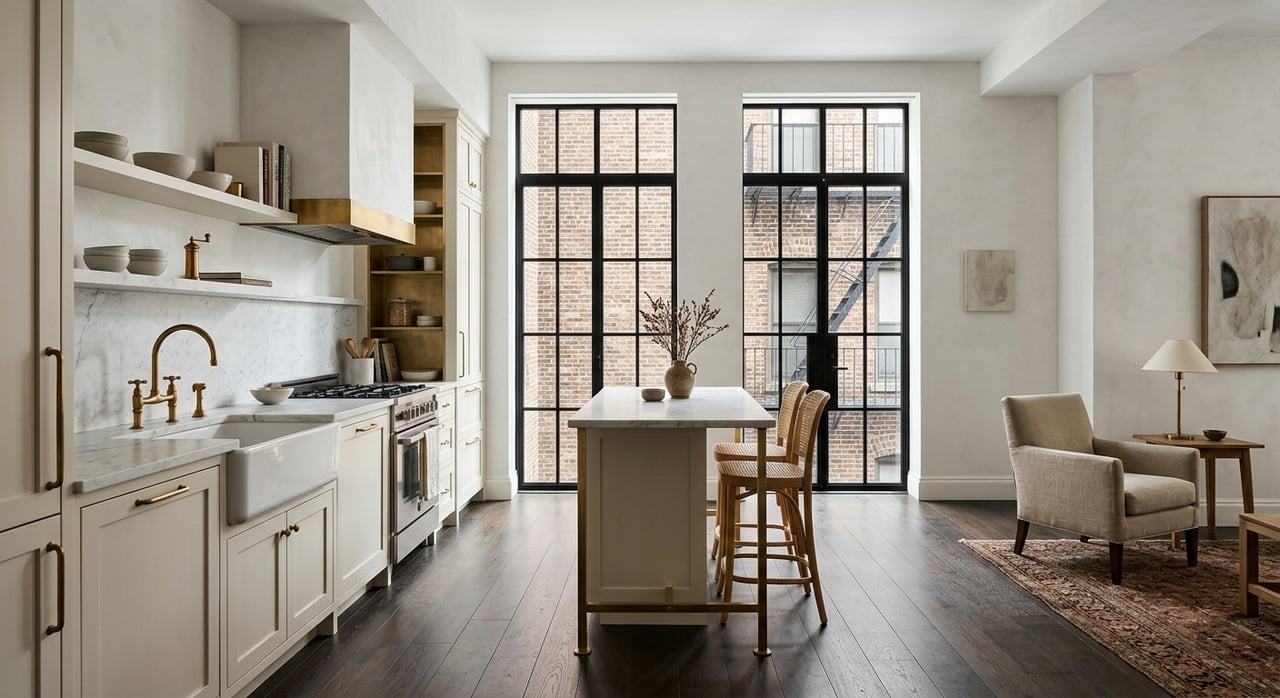
That contrast gives buyers real choice. You may prefer a classic prewar co-op on a tree-lined block, a larger apartment in a full-service avenue building, or a newer waterfront residence with a more contemporary feel.
The Riverside-West End Historic District and the Upper West Side/Central Park West Historic District help preserve much of the neighborhood’s classic streetscape. In practical terms, that means many buyers are drawn here for architecture as much as location.
These areas are heavily associated with prewar apartment buildings and a strong sense of continuity in the streetscape. If you value scale, masonry detail, and a classic Manhattan feel, these blocks often define the neighborhood’s character.
The newer side of the Upper West Side is most visible in Riverside South, the stretch between West 59th and West 72nd Streets that transformed from industrial land into high-density residential development with waterfront parkland.
This gives the neighborhood a more modern counterpoint to its older housing stock. For some buyers, that means newer layouts and a different building style while still remaining within the broader Upper West Side lifestyle.
The Upper West Side is one neighborhood, but it does not feel identical from block to block. A few micro-areas can help you understand how daily life may vary.
This southern section feels closely tied to culture and transit access. You are near Columbus Circle, Lincoln Center, and several major subway connections, which can make the area feel especially convenient and active.
This central retail corridor is where much of the neighborhood’s everyday movement happens. If you want immediate access to restaurants, shops, and services, these avenues often provide that active street life.
These areas often read as quieter and more residential. They are closely tied to the western park edge and include landmarked sections that reinforce the neighborhood’s classic architectural identity.
This stretch is strongly associated with prewar apartment architecture and landmark protection. It also places major cultural institutions directly into the neighborhood experience, especially for buyers who value Central Park access and historic building character.
The Upper West Side is one of Manhattan’s most established and expensive neighborhoods, and the data supports that clearly. According to the NYU Furman Center, the 2024 median household income was $152,250, and the neighborhood ranked as the city’s sixth highest median-income neighborhood.
Furman also reports a median gross rent of $2,780, a homeownership rate of 35.6%, and a rental vacancy rate of 7.1% in 2024. The neighborhood ranked as the city’s seventh most expensive rent neighborhood, which helps explain why buyers often see ownership here as part lifestyle decision and part long-term housing strategy.
The household mix is also worth noting. Planning material describes the broader neighborhood as home to many family households, while Furman reports that 43.6% of households were single-person households in 2024. In other words, the Upper West Side supports more than one kind of lifestyle.
The Upper West Side often appeals to buyers who want a residential cadence without giving up central Manhattan convenience. The combination of major parks, cultural institutions, strong retail corridors, and established housing stock creates a neighborhood that can feel both substantial and livable.
You may be drawn to it if you want classic Manhattan architecture, a daily routine built around walking, and the ability to move between quieter blocks and active avenues. You may also appreciate that the neighborhood offers both long-standing prewar character and selected newer development, depending on your priorities.
For buyers approaching the neighborhood thoughtfully, the key is not just deciding whether you like the Upper West Side in general. It is understanding which part of the Upper West Side best matches how you want to live.
If you are considering a move on the Upper West Side or comparing it with other Manhattan neighborhoods, a tailored strategy can make the search far more precise. Tony Sargent offers discreet, senior-level guidance for buyers and sellers who value neighborhood fluency, thoughtful positioning, and a highly personalized approach.
Compass
110 5th Avenue, 3rd Floor New York, NY 10011