If you are drawn to the idea of Manhattan living with art, open space, and architecture all woven into your daily routine, Chelsea’s High Line corridor stands out quickly. This stretch of the neighborhood offers a rare mix of elevated park access, waterfront recreation, gallery density, and housing that ranges from historic row houses to sleek newer condominiums. If you are considering a move here, understanding how these pieces fit together can help you buy with more clarity and confidence. Let’s take a closer look.
The High Line is not just a famous park. It is a 1.45-mile elevated public space that runs from Gansevoort Street to West 34th Street between Tenth and Eleventh Avenues, and it has become one of the defining features of life on Manhattan’s West Side.
Originally built in 1934 as an elevated freight rail line, it stopped rail service in 1980 and was later transformed into a public park. Today, the City of New York owns the park, and it is operated with Friends of the High Line and NYC Parks.
For residents in Chelsea, the High Line often functions as part of the everyday neighborhood rhythm. Official visitor information lists access points around 14th, 16th, and 23rd Streets, which makes it practical for walks, casual meetings, and moving through the area.
Its design is also part of the appeal. The park preserves the original rail character, incorporates planting inspired by the wild growth that appeared after train service ended, and includes signature seating and river-view areas that make even a short visit feel distinctive.
One of the strongest draws of life along the High Line in Chelsea is how closely culture is tied to the area. This is not a neighborhood where arts and design feel added on. They are part of the environment.
West Chelsea remains a major gallery district. According to local reporting and NYC Planning, the area includes more than 300 contemporary art galleries, alongside arts-related businesses, former warehouses, and newer residential and commercial buildings.
That combination gives the neighborhood a very specific texture. On one block, you may find industrial loft character and gallery spaces. On the next, you may see polished new development or a quieter residential streetscape east of Tenth Avenue.
The High Line itself also supports this cultural identity. Friends of the High Line says the park hosts more than 450 public programs and activities each year, reinforcing its role as both open space and public gathering place.
Lifestyle in this part of Chelsea is about more than architecture and views. It is also about having useful, memorable places close at hand.
Chelsea Market, just to the south in the Meatpacking District, is part of the regular routine for many residents in the broader High Line area. Its concourse is open from 7:00 AM to 10:00 PM, making it an easy option for coffee, casual meals, food shopping, or meeting friends.
This matters when you think about daily living, not just weekend plans. In a dense Manhattan neighborhood, convenience often shapes how a place feels over time.
In Chelsea, the mix of dining, specialty retail, galleries, and park access supports a lifestyle that feels layered and walkable. You are not relying on a single amenity. You are choosing a neighborhood where many routines can happen within a compact footprint.
If the High Line provides one kind of open space, Hudson River Park adds another. Chelsea’s section of the park runs from West 17th Street to West 34th Street and includes Chelsea Waterside Park, Pier 62, Chelsea Piers, and the Chelsea Entry Garden.
The park is generally open from 6:00 AM to 1:00 AM unless otherwise posted, which makes it especially useful if you like early runs, waterfront walks, or evening time outdoors. For many buyers, that extended access is part of what makes this west-side location so livable.
The waterfront also broadens your recreation options. Hudson River Park notes that its bikeway runs the length of the park and is dedicated to bicycles, skateboards, and rollerbladers.
Nearby, Chelsea Piers adds another layer of activity with golf, ice skating, rock climbing, bowling, and event space. Taken together, the High Line and the waterfront create a neighborhood experience that balances city energy with room to move.
The housing stock around the High Line is one of the area’s most interesting features because it is not uniform. If you are buying here, you should expect a mix rather than a single architectural type.
NYC Planning describes West Chelsea as an area where low-rise galleries, loft buildings, warehouses, and newer residential and commercial development coexist. East of Tenth Avenue, the residential fabric also includes historic row houses, new condominiums, and taller residential towers.
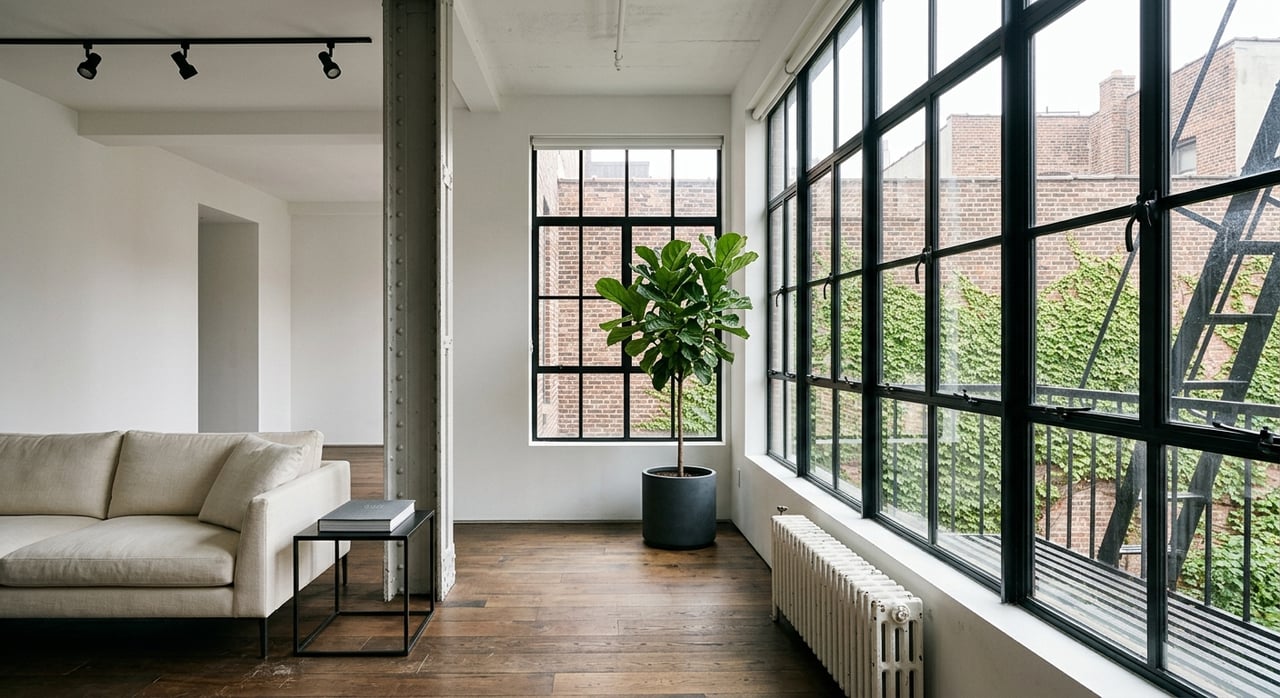
That variety gives buyers very different ways to live within the same broader neighborhood. You may be choosing between loft-like volume, a more traditional townhouse block, or a newer full-service condominium with a more contemporary layout and finish level.
For design-oriented buyers, this diversity is often part of Chelsea’s appeal. The neighborhood can offer historic texture, adaptive-reuse character, and newer development in close proximity.
In Chelsea’s landmarked row-house areas, the typical house is narrow and attached. NYC Planning describes many Greek Revival and Italianate row houses as three to four stories tall, about 16 to 18 feet wide, with brick or brownstone facades, stoops, wrought-iron railings, and planted front yards.
These homes contribute to the streetscape many buyers picture when they think about classic Manhattan residential blocks. Even if you ultimately buy in a condominium, these surrounding streets often shape the feel of the neighborhood.
If you are considering a landmarked property, there is an important practical point to keep in mind. The New York City Landmarks Preservation Commission states that designated buildings and properties in historic districts require LPC approval before alteration, reconstruction, demolition, or new construction that affects the protected structure.
Closer to the High Line, buyers will also encounter newer residential buildings and loft-style properties shaped by the area’s industrial past. This blend is a large part of why the corridor feels distinct from more uniform residential neighborhoods.
Some buildings lean into warehouse scale and loft character. Others reflect more recent condominium development tied to the west side’s broader growth.
For buyers who value clean lines, amenity-driven living, or a more contemporary home near art and open space, this area can offer a compelling fit. For buyers who want prewar texture and lower-rise context, the blocks just east may feel more aligned.
Views along the High Line are highly specific to the building, floor, and exact block. Still, the corridor’s geography gives you a useful starting framework when comparing homes.
As a general rule, west-facing upper floors are the most likely to capture Hudson River light and more open sky. East-facing homes tend to look back toward Chelsea’s established streetscape, while some north-facing units may pick up broader skyline exposure toward Hudson Yards.
This is one reason in-person evaluation matters so much here. Two homes only a short distance apart can offer very different light, privacy, and outlook.
When you are buying in this part of Chelsea, it helps to think beyond square footage alone. Orientation, neighboring buildings, and how the unit sits within the block can have a meaningful effect on everyday experience.
Chelsea’s High Line corridor offers strong connectivity, which adds to its long-term appeal. NYC Planning notes access to the Eighth Avenue subway line, the 7 train extension at West 34th Street, and nearby ferry service.
Hudson River Park also lists nearby transit connections around Chelsea Piers, including C, E, L, 7, M14, and M23 service. That gives residents multiple ways to move downtown, uptown, crosstown, or toward the west side waterfront.
In practical terms, this means the neighborhood supports several kinds of movement at once. You can walk the High Line, use the waterfront bikeway, take the subway, or connect through bus and ferry routes depending on your day.
That layered access is part of what makes this section of Chelsea feel unusually flexible. It supports both lifestyle-driven living and day-to-day Manhattan efficiency.
The clearest way to understand life along the High Line in Chelsea is to see it as a blend of preserved 19th-century streets, adaptive-reuse loft character, newer residential development, and unusually strong access to culture and outdoor space. The appeal is not about one single building type or one single amenity.
Instead, it is about how these elements overlap. You have a major public park running through the neighborhood, a waterfront park system nearby, one of Manhattan’s strongest gallery corridors, and a housing mix that can suit very different priorities.
For some buyers, that means a design-forward condominium near the High Line. For others, it means a quieter historic block with easy access to everything west of Tenth Avenue.
If you are exploring Chelsea with a long-term view, this corridor deserves a careful, block-by-block look. The right fit often comes down to nuance, from building character and outlook to access points, daily routines, and the kind of Manhattan experience you want to create.
If you are considering a purchase or sale in Chelsea and want a more tailored view of the neighborhood, Tony Sargent offers discreet, design-minded guidance shaped by deep Manhattan market experience.
Compass
110 5th Avenue, 3rd Floor New York, NY 10011