If you own a West Village brownstone, you are not just selling square footage. You are selling architecture, mood, and the rare feeling buyers get when a house seems to belong exactly where it stands. In a neighborhood where charm often leads the first impression, thoughtful preparation can shape how your home is perceived from the first photo to the final offer. This guide walks you through the pre-sale decisions that matter most, from cosmetic updates and landmark sensitivity to staging, timing, and launch strategy. Let’s dive in.
West Village buyers often respond to the building before they respond to the floor plan. The neighborhood is known for historic townhouses and walk-ups, and even homes with older interiors can draw attention because the exterior character is so strong. That means your goal is not to erase the home’s age. It is to present it as polished, cared for, and true to its setting.
That context matters even more in a market where presentation and pricing discipline can affect both momentum and outcome. StreetEasy reports a neighborhood median sale price of about $1.5 million and 55 median days on market overall, while Manhattan townhouse data cited in the research shows a much longer average marketing window and sales at 93.0% of last asking price. For a brownstone seller, that is a reminder that a standout launch usually comes from preparation, not improvisation.
For most sellers, the highest-value work is not a full renovation. It is a selective refresh that improves how the home looks, feels, and photographs. National staging and remodeling data in the research points to a consistent set of pre-listing priorities: decluttering, deep cleaning, curb appeal, painting, minor repairs, and professional photography.
In a West Village brownstone, that usually means choosing updates that respect the house rather than overpower it. Buyers want to see character clearly. They also want confidence that the home has been maintained.
Fresh paint is one of the simplest ways to make an older townhouse feel brighter and more unified. It can help period details stand out, reduce visual noise, and create a calmer backdrop for photography and showings. The research identifies whole-home painting as one of the top projects agents recommend before listing.
Minor repairs matter just as much. Loose hardware, worn trim, sticky doors, cracked plaster, and tired caulking may seem small on their own, but together they can make a home feel deferred rather than cared for. In a brownstone sale, buyers often read these details as signals about maintenance.
A full gut renovation is not always the smartest pre-sale move. The research supports a more measured approach, with minor kitchen upgrades offering better resale logic than major overhauls. In many West Village homes, small edits can go a long way.
Consider targeted improvements such as refinished cabinetry, updated hardware, repaired tile, fresh grout, new lighting, or a cleaner paint palette. In bathrooms, the same principle applies. You want these rooms to feel crisp, functional, and visually quiet.
The front approach sets the tone before a buyer even crosses the threshold. Research on seller preparation highlights curb appeal as a top recommendation, and that is especially true for townhouse product. A brownstone stoop, front door, railings, lighting, and entry sequence all shape the first emotional response.
Simple improvements can have outsized impact. Clean stone, repaired hardware, a refreshed front door, tidy plantings if present, and a carefully edited vestibule can make the home feel elevated from the start. Buyers tend to remember that first moment.
In West Village, exterior work is not just a design question. It can also be a regulatory one. The Landmarks Preservation Commission says it must approve alterations, reconstruction, demolition, or new construction affecting a designated building, and it reviews changes to buildings in historic districts to ensure they fit district character.
That does not mean every repair triggers a formal review. LPC notes that ordinary exterior repairs, such as replacing broken window glass, do not require approval. Still, if you are considering any visible exterior change before listing, it is wise to confirm early whether approval may be needed.
This matters because brownstone prep often includes façade touch-ups, entry work, railings, doors, or window-related decisions. Even if the work seems modest, timing can be affected if the property sits within a designated historic district or is otherwise protected. Delays are easier to manage when they happen in planning, not in the middle of your listing calendar.
A period-sensitive strategy usually works best. Preserve what gives the home its identity, repair what distracts, and avoid rushed exterior changes that create approval issues or design mismatch.
High-end townhouse staging is not about filling rooms. It is about helping buyers understand scale, flow, and lifestyle. According to the research, 83% of buyers’ agents say staging makes it easier for buyers to visualize a home as their future residence.
The rooms that matter most are also clear in the data. Buyers respond most strongly to the living room, primary bedroom, and kitchen, while sellers most often stage the living room, primary bedroom, dining room, and kitchen. If you want to allocate budget thoughtfully, start there.
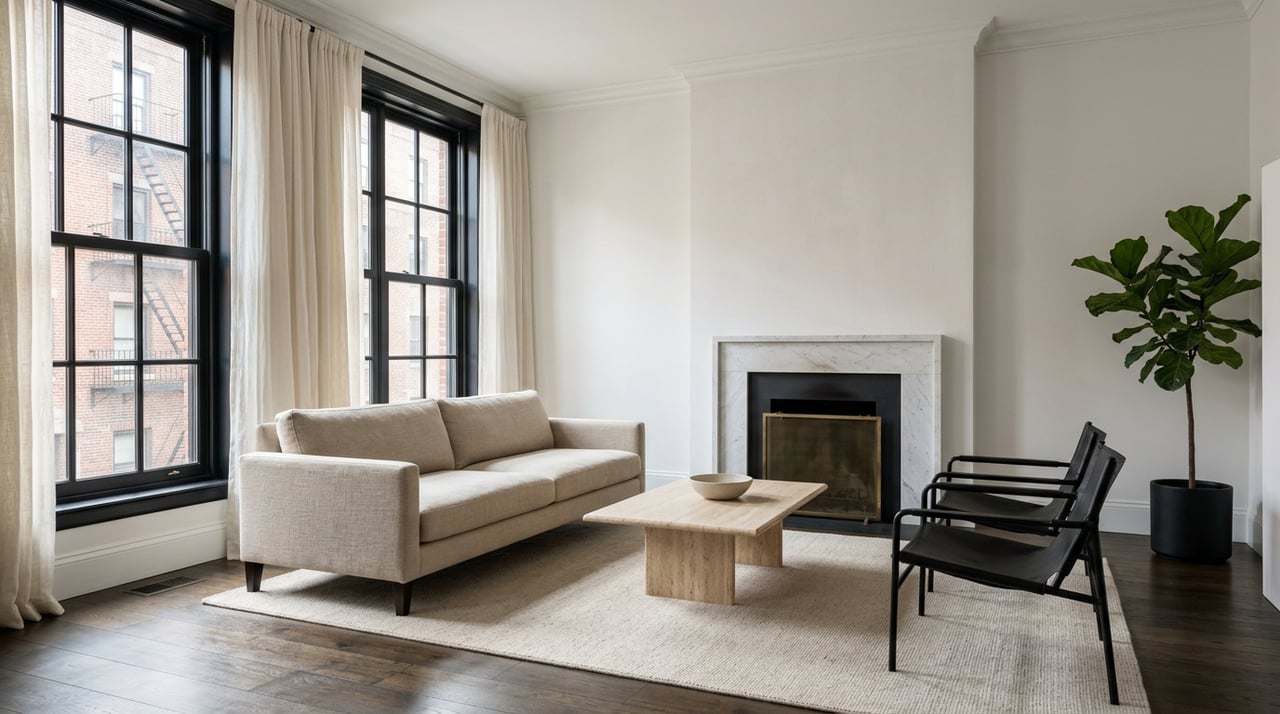
In a West Village brownstone, the living room often carries much of the emotional weight. It may hold original proportions, fireplace mantels, tall windows, or a gracious floor-through feel. Staging should highlight volume, natural light, and how the room can actually be lived in.
The primary bedroom should feel calm and scaled correctly. The kitchen should read as edited and functional, even if it is not brand new. If the house includes a garden level, home office, or parlor floor with special character, those spaces may also deserve extra attention depending on the layout.
The research suggests staging can influence offers, with some sellers’ agents reporting a 1% to 5% increase in offer value and others reporting 6% to 10%. While results are never guaranteed, the message is clear: presentation can affect both interest and perceived value.
For a design-conscious West Village buyer, staging should feel restrained and architectural. Clean lines, proper scale, and a sense of breathing room usually outperform anything too thematic or overly personal.
Your first showing usually happens online. In the research, photos ranked as highly important to 73% of buyers’ agents and 88% of sellers’ agents, ahead of physical staging, video, and virtual tours. For a brownstone, that makes listing media part of the sale strategy, not an afterthought.
A strong photo set should tell the story of the house floor by floor. It should show where the light lands, how rooms connect, and what gives the property its character. Image order matters because buyers often decide within moments whether they want to see more.
A standout West Village launch usually begins with the façade or entry if it is strong, then moves into the most compelling entertaining space, followed by the kitchen, primary suite, and the rest of the home in a clear sequence. That approach helps buyers understand the property as a townhouse, not just a collection of rooms.
This is where editing becomes essential. Overfurnished rooms photograph smaller. Too many personal items compete with architectural detail. The goal is a calm, elegant story that feels both aspirational and believable.
If you want to improve presentation without paying for every step upfront, Compass Concierge may be worth considering. According to Compass, the program can front services such as staging, painting, flooring, deep cleaning, decluttering, and cosmetic renovations, with no payment due until closing, subject to terms and possible fees or interest depending on the state.
That can be especially useful when a brownstone needs a coordinated pre-list refresh. Instead of delaying the launch while you sort through vendors and timing, you may be able to tackle the work in a more organized way.
The key is not to use Concierge for everything. It is to use it for the work most likely to improve presentation and sale readiness. In many cases, that means focusing on painting, repairs, cleaning, staging, and selected cosmetic improvements rather than broad renovation.
Compass also notes that sellers may begin as a Private Exclusive or launch as Coming Soon to build demand before a full public debut, without accruing days on market or price-drop history, subject to rules and exclusions. For a townhouse seller who values discretion and controlled timing, that flexibility can be useful.
Timing matters in New York, and the clearest signal in the research points to spring. StreetEasy says buyers found the most available listings in May over the last three years because inventory tends to build through early spring and then decline after Memorial Day.
If you want a standout launch, the best move is often to be ready before that surge is in full swing. That gives you time to prepare the home properly, photograph it well, and enter the market when buyer attention is active rather than rushed.
For many sellers, that means planning your prep months ahead. If a spring launch is the goal, winter is often when decisions about painting, repairs, staging, editing, and any exterior review should already be underway. Waiting until the market gets busy can compress the process and weaken the final presentation.
A brownstone tends to reward patience and sequencing. The strongest launches rarely happen because a seller moved fast. They happen because the seller moved early.
Even a beautifully prepared townhouse needs a realistic pricing strategy. The research notes that correctly priced properties tend to generate stronger interest and can sell faster, while Manhattan townhouse data shows longer average days on market and average sales at 93.0% of last asking price.
That makes pricing a comp-driven exercise. You want to look closely at recent townhouse sales, current competition, and the specific condition and appeal of your house. Testing the market with a stretched asking price can cost time and weaken leverage.
A polished launch does not replace market discipline. It supports it. When your home is staged, photographed, and positioned properly, buyers are more likely to understand the value you are asking them to pay.
In West Village, the best result often comes from a simple formula: preserve the character, improve the presentation, time the launch carefully, and price from evidence. That is how a brownstone feels special without feeling speculative.
Selling a West Village brownstone is part design exercise, part market exercise, and part timing exercise. The houses that stand out are usually not the ones with the biggest renovation budget. They are the ones that present beautifully, respect the neighborhood context, and arrive on the market with a clear strategy. If you are considering a sale and want a measured, design-led approach to preparation, pricing, and launch, connect with Tony Sargent for a confidential consultation.
Compass
110 5th Avenue, 3rd Floor New York, NY 10011