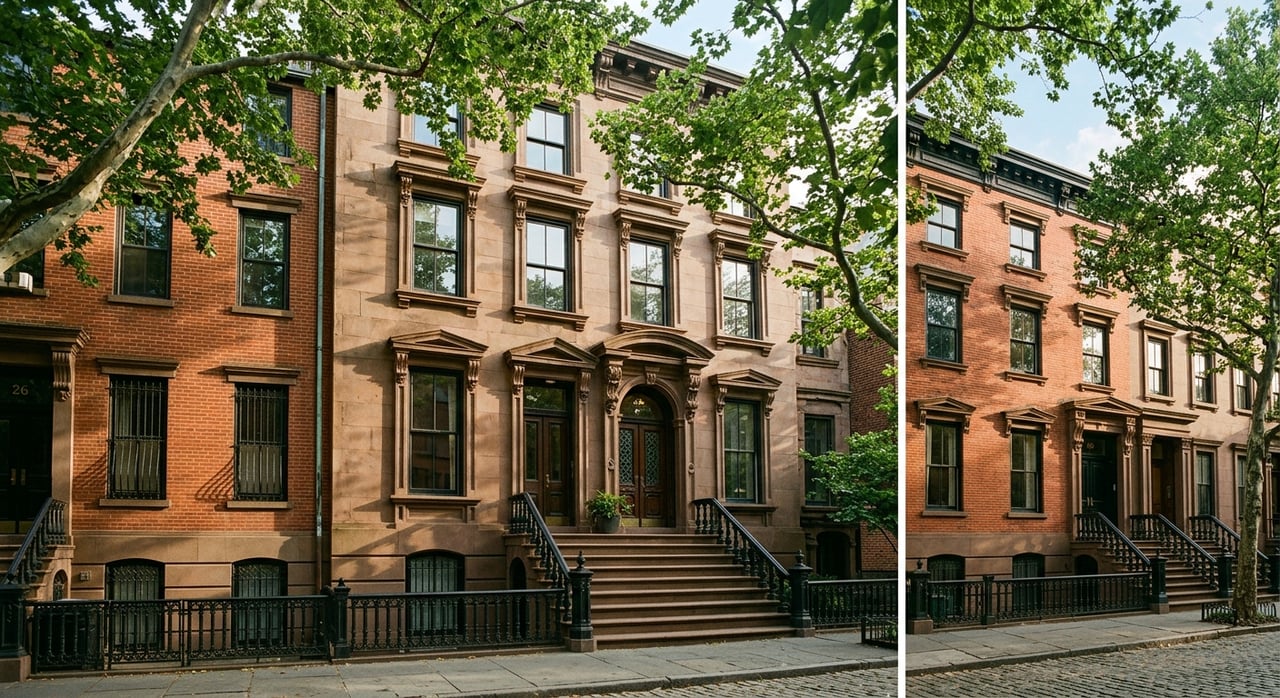
What does luxury look like when it does not need to announce itself? In Gramercy, it often looks like tree-lined blocks, preserved facades, and a neighborhood rhythm that feels notably calm for such a central part of Manhattan. If you are drawn to homes with history, privacy, and a more understated kind of prestige, Gramercy offers a compelling case. Let’s take a closer look.
In Gramercy, luxury is often tied less to flashy amenities and more to setting, architecture, and restraint. The neighborhood grew as a planned residential enclave, and the area around Gramercy Park still reflects that original intention.
The park itself plays a major role in that identity. It is a private square, fenced and reserved for surrounding lot holders, and some nearby buildings have access to park keys. That structure creates a sense of separation from the city around it, even though you remain in the middle of Manhattan.
Gramercy has a distinctly preserved feel. The Landmarks Preservation Commission has noted that the district retained much of its original character, and the neighborhood was designed with residential use in mind rather than large-scale business activity.
That difference still shows up in daily life. Interior streets remain primarily residential, while commercial activity is concentrated more along First and Second Avenues. For you as a buyer, that can mean a calmer block experience without giving up access to the wider city.
Few Manhattan neighborhoods are defined by a single green space the way Gramercy is. Gramercy Park is not a public park, and access is selective rather than automatic across the neighborhood.
That matters because it shapes expectations. If park access is important to you, it is something to confirm building by building early in your search. Some immediately surrounding buildings may have keys available to residents, while others do not.
Gramercy sits in a highly connected part of Manhattan, near areas including Flatiron, Union Square, Rose Hill, Kips Bay, and Stuyvesant Square. Major cross streets like East 14th, East 20th, and East 23rd Streets help anchor the neighborhood within the broader East Side context.
Even so, Gramercy reads as more subdued than many nearby areas. That balance is part of its appeal. You get a central address with a more residential tone.
Gramercy’s housing stock is varied, but it feels visually coherent because of the neighborhood’s strong architectural language. Historic reports describe a mix of Greek Revival, Anglo-Italianate, Gothic Revival, Beaux Arts, brownstone, and later apartment-house forms.
For buyers, that means the neighborhood is not one-note. You may find park-facing townhouses and brownstones, prewar co-ops, later apartment houses, and other multifamily elevator or walk-up buildings. Yet many of these homes still feel connected through common materials, scale, ironwork, and small gardens.
Gramercy’s luxury often reads as preservation-driven rather than amenity-driven. That does not mean homes here lack comfort or quality. It means the value proposition is often rooted in proportion, facade detail, established streetscapes, and architectural continuity.
If you prefer a building with a strong sense of place over one built around a large amenity package, Gramercy may feel especially appealing. The neighborhood rewards buyers who notice texture, scale, craftsmanship, and setting.
Quiet luxury also comes with practical considerations. Gramercy is not just beautiful. It is also a neighborhood shaped by preservation rules and building-level ownership structures that can affect how you buy, renovate, or use a home.
Understanding those details early can save time and help you focus on the right inventory.
The Gramercy Park Historic District was designated in 1966 and later extended in 1988. If a building is landmarked or located within the historic district, most exterior alterations, demolition, and new construction require approval from the Landmarks Preservation Commission before work begins.
For many buyers, that is part of the appeal because it helps protect the neighborhood’s visual character. At the same time, it is important to go in with clear expectations. If your plans involve changing windows, facades, rooftop additions, or other exterior elements, approvals may be part of the process.
Not every project triggers the same review. Ordinary interior work generally does not require LPC approval unless it affects the exterior or otherwise triggers a Department of Buildings permit tied to exterior implications.
That distinction can be useful if you are considering a design update rather than a visible exterior change. In a neighborhood like Gramercy, smart planning starts with understanding where flexibility exists and where it does not.
Co-op ownership is common around the park. That makes it especially important to verify each building’s policies at the start of your search, particularly if you want future leasing flexibility.
City guidance notes that renting in co-ops is generally not permitted, though specific policies vary by building. If you are buying a primary residence, that may be less of a concern. If you are considering a pied-a-terre or want optionality later, it is worth reviewing house rules and board expectations early.
Gramercy often appeals to buyers who value privacy, architectural continuity, and a polished but low-key Manhattan lifestyle. It can be a strong match if you want a central home base without a constant nightlife or heavy retail environment directly outside your door.
In practical terms, the neighborhood may suit design-conscious owners, downsizers, and some pied-a-terre buyers who are comfortable with preservation rules and a building-by-building approval culture. It is a place where subtlety tends to matter more than spectacle.
Gramercy is primarily residential, but it is not isolated. Commercial uses are concentrated along First and Second Avenues, and the broader area includes smaller open spaces like Augustus St. Gaudens Playground and Peter’s Field.
For broader context, the city’s combined Gramercy Park and Murray Hill neighborhood report showed relatively low household crowding at 3.5% and a rent burden of 41.2%, both lower than most neighborhoods, along with functioning air conditioning in 94.3% of households in 2017. These figures apply to a combined geography rather than Gramercy alone, but they still offer a useful neighborhood-level snapshot.
If you are considering Gramercy, it helps to look beyond finishes and square footage. In this neighborhood, value is often tied to nuances that do not always show up first in listing photos.
A thoughtful search should include questions like:
These are the kinds of details that shape the lived experience in Gramercy. They also affect long-term fit, especially for buyers who want a home that feels both elegant and enduring.
Gramercy’s appeal is not based on trend-driven buzz. It comes from something harder to replicate: a private-park model, strong preservation framework, and a streetscape that has remained recognizably residential over time.
That combination gives the neighborhood a cultivated, understated character that many buyers find deeply appealing. If your idea of luxury is calm, architecture, discretion, and a sense of permanence, Gramercy stands apart.
For buyers seeking a refined Manhattan home with privacy, history, and a quietly confident identity, Gramercy deserves serious consideration. If you want tailored guidance on evaluating co-ops, park-adjacent residences, or discreet buying opportunities in downtown and central Manhattan, Tony Sargent offers a senior, highly personalized approach.
Compass
110 5th Avenue, 3rd Floor New York, NY 10011