Looking for space, character, and a layout that still feels distinctly New York? On the Upper West Side, the classic six remains one of the neighborhood’s most recognizable prewar apartment types. If you are weighing whether this format fits your lifestyle, this guide will help you understand what defines a classic six, why the layout is so common here, and what tradeoffs to expect before you buy. Let’s dive in.
A classic six is a prewar New York apartment with six principal rooms. In most cases, that means a living room, formal dining room, kitchen, two bedrooms, and a smaller staff room or maid’s room.
Bathrooms, pantries, and entrance galleries are not counted in the six. Many classic six apartments also include at least two bathrooms, and many are roughly 1,500 to 2,000 square feet.
What really sets the layout apart is not just the number of rooms. It is the way the apartment is organized, with public rooms, private rooms, and service space separated by halls or galleries.
That separation creates a more formal feel than you typically find in newer open-plan homes. It can also give you more privacy, better noise separation, and more flexibility in how you use each room.
The Upper West Side has a deep connection to classic six living because of its architectural history. The neighborhood stretches from 59th to 110th Street between Central Park and the Hudson River, and by the turn of the century it had become one of New York City’s major centers for apartment-house construction.
It also holds the city’s highest concentration of fine turn-of-the-century apartment buildings. That history helps explain why the area is still one of the strongest places in Manhattan to find classic six layouts today.
Most classic six apartments on the Upper West Side are found in older, more formal co-op buildings. Many date to the prewar period, especially from roughly the 1920s through 1940.
For buyers, that often means access to homes with generous proportions and a sense of scale that newer buildings do not always match. It also means the layout tends to reflect another era, with more defined rooms and a more intentional separation of living spaces.
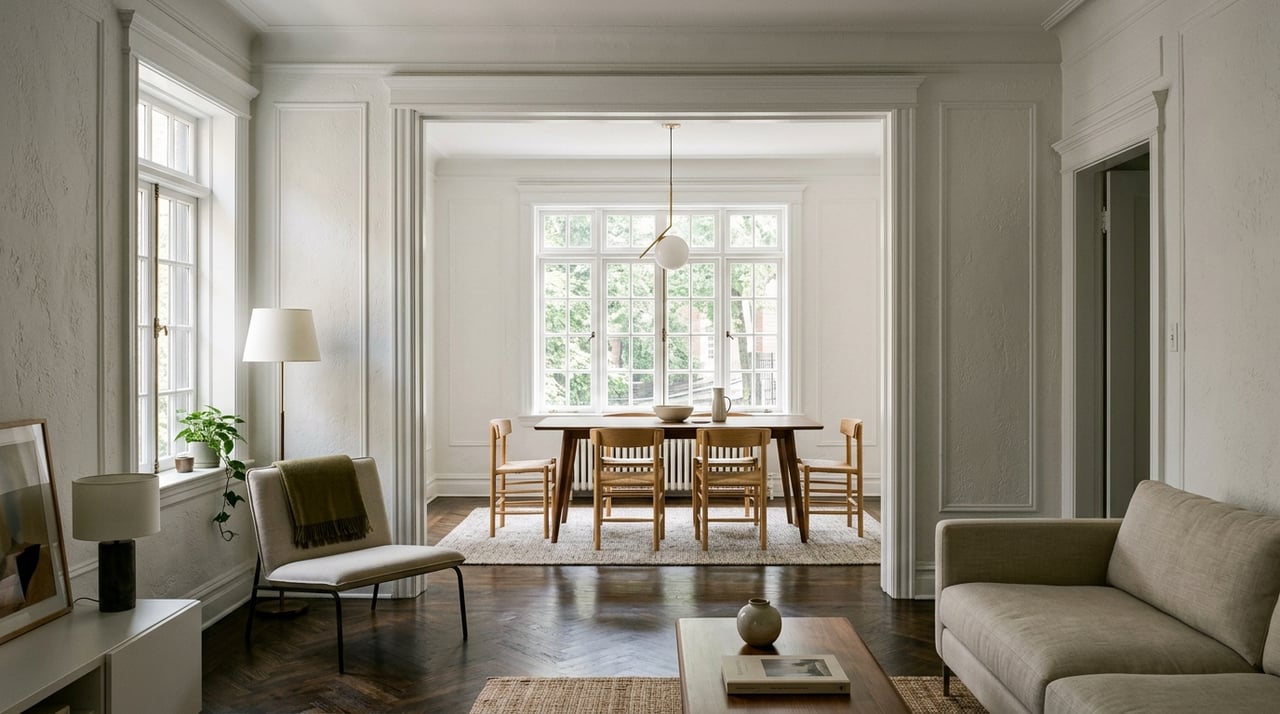
On the Upper West Side, classic six apartments often come with details that buyers actively seek out in prewar homes. These can include high ceilings, plaster moldings, thick walls, solid-core doors, and oak or herringbone floors.
You may also find gracious foyers or entrance galleries, windowed kitchens, and large rooms with balanced proportions. Some apartments even include wood-burning fireplaces, though features vary by building and unit.
These details matter because they shape how the home feels day to day. Even before a renovation, a well-preserved classic six often offers texture, depth, and architectural character that can be difficult to replicate in newer construction.
For many buyers, the biggest appeal of a classic six is how clearly it separates different parts of daily life. You can entertain in the living room, keep a true dining room for meals or gatherings, and still preserve privacy in the bedroom wing.
That layout also gives you useful flexibility. The former staff room is often repurposed today as a home office, guest room, or other overflow space.
If you work from home or host visitors regularly, that extra room can make the apartment feel far more adaptable. It is one reason classic six layouts continue to attract buyers even as lifestyle needs have changed.
There is also a sense of rhythm to these homes that many people find appealing. Instead of one large shared space doing everything, each room has a more defined role.
Classic six apartments are traditional in origin, but they can still work well for modern living. In some renovated homes, owners open the dining room to the living room to create a larger shared great room while preserving other prewar features.
That approach can give you more openness without losing the charm and structure that make the apartment distinctive. It is a common middle ground for buyers who want both classic architecture and a more current flow.
The smaller staff room is also a good example of how these homes have evolved. What was once service space is now often marketed and used as an office or guest area, depending on the apartment and building rules.
Classic six living is not the right fit for everyone. If you prefer wide-open spaces, oversized kitchens, or extensive building amenities, a prewar co-op may feel less aligned with your priorities.
Many classic six homes were not designed around today’s open-concept expectations. Kitchens may be smaller, bathrooms may feel less generous than in newer buildings, and laundry or central air-conditioning may not be present in the apartment or building.
That does not make these homes less desirable. It simply means you are often choosing character, room separation, and architectural scale over newer systems and amenity packages.
For some buyers, that is an easy trade. For others, it is important to weigh carefully before moving forward.
If you are comparing a classic six on the Upper West Side to a newer condo, the decision often comes down to lifestyle priorities. In general, newer condos are more likely to offer open layouts, more building amenities, and a simpler approval process.
Classic six co-ops usually offer more prewar character, more formal room separation, and often a stronger sense of architectural identity. Newer condos usually offer more flexibility and convenience.
Here is a simple comparison:
| Feature | Classic Six Co-op | Newer Condo |
|---|---|---|
| Layout | More formal, compartmentalized | More open-plan |
| Character | Prewar details and scale | More contemporary finishes |
| Amenities | Often fewer | Often more extensive |
| Approval | Usually stricter board review | Usually easier approval |
| Ownership context | Commonly governed by co-op rules and offering plans | Governed by condo structure and offering plans |
Neither option is automatically better. The right choice depends on how you want to live, what kind of building experience you value, and how much importance you place on charm versus convenience.
Because many Upper West Side classic six apartments are co-ops, the purchase process can be more involved than a condo purchase. Co-op buyers often face detailed board applications, interviews, and stricter financial requirements.
In New York, cooperative and condominium sales are governed by offering plans. If you are seriously considering a classic six co-op, it is wise to review the building’s rules, financial expectations, renovation policies, and offering plan early in the process.
This step matters because two apartments with similar layouts can come with very different building requirements. Understanding those details upfront can save time and help you focus on opportunities that truly fit your needs.
A classic six can be a compelling purchase, but it pays to look beyond the floor plan. Before making an offer, consider asking about the points that most often affect day-to-day use and future plans.
Key questions include:
These questions are especially important on the Upper West Side, where layouts can vary from building to building even when the listing calls the apartment a classic six.
If you value privacy, a true dining room, architectural detail, and a layout with distinct zones, a classic six may be a strong match. On the Upper West Side, this apartment type remains closely tied to the neighborhood’s prewar identity and enduring appeal.
If you want a more open layout, more amenities, or a less involved approval process, a newer condo may better suit your goals. The key is understanding what you are trading for and what you are trading away.
For buyers who appreciate prewar scale and the quiet practicality of separate rooms, classic six living can still feel remarkably relevant. On the Upper West Side, it is one of the clearest ways to buy into both the architecture and the history of the neighborhood.
If you are considering a classic six on the Upper West Side and want a discreet, well-informed perspective on layout, building fit, and buying strategy, Tony Sargent can help you evaluate the right opportunity with care.
Compass
110 5th Avenue, 3rd Floor New York, NY 10011