If you spend time looking across prime Manhattan neighborhoods, Tribeca stands out fast. It offers a rare mix of privacy, historic character, and everyday ease that can be hard to find in one place. For global buyers, that balance often matters as much as the apartment itself. Let’s look at why Tribeca continues to draw attention from buyers who want a polished downtown home base.
Tribeca is often described as an upscale downtown neighborhood with quiet cobblestone streets, cast-iron loft buildings, and less congestion than nearby SoHo. It is also one of the most central neighborhoods in downtown Manhattan, with strong subway access and close proximity to the Financial District. That combination gives you a neighborhood that feels established and calm while still keeping the city close at hand.
For international buyers and bi-coastal buyers, that can be especially appealing. You may want a home that feels refined and discreet, not overly busy or constantly on display. Tribeca has long carried that lower-key identity, which helps explain its staying power at the top of the downtown market.
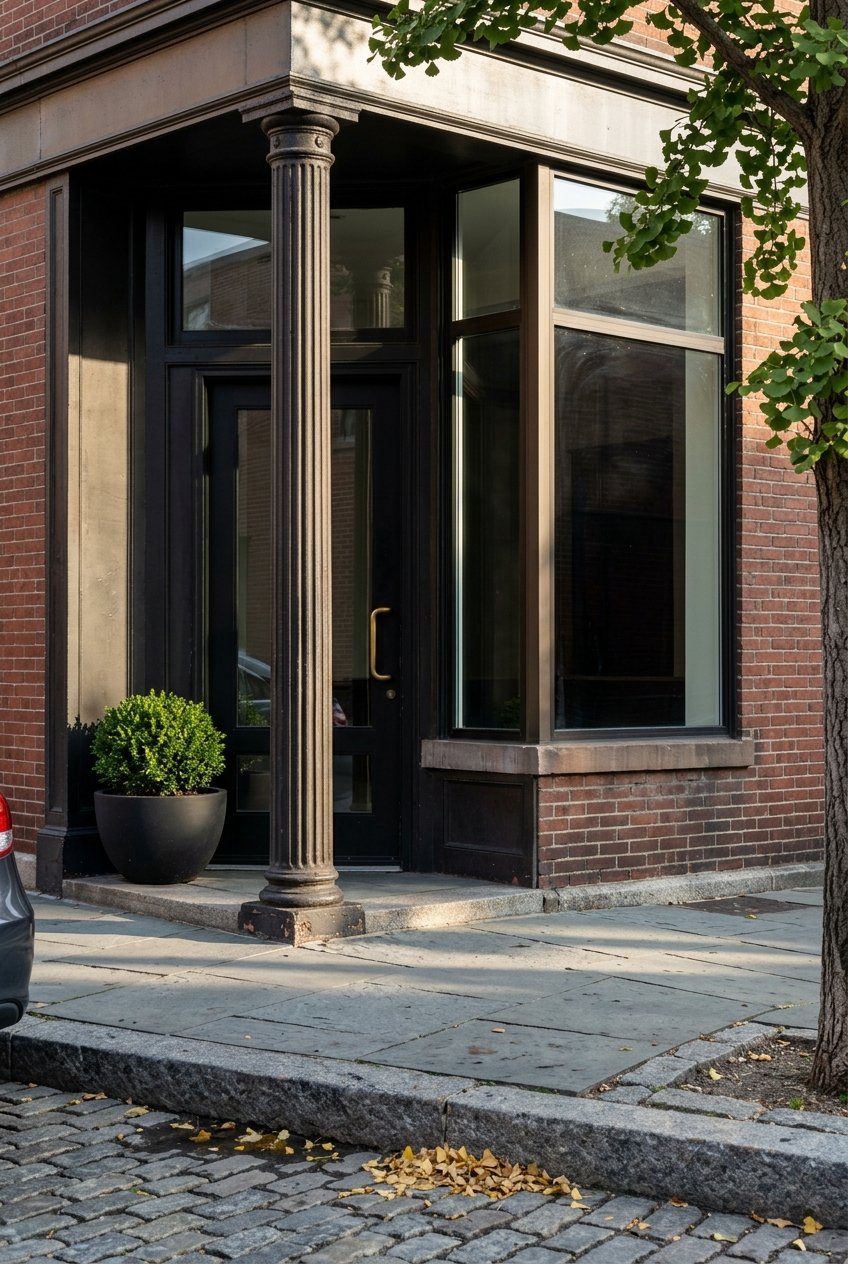
A big part of Tribeca’s pull comes from its built environment. The neighborhood’s historic core is rooted in 19th-century store-and-loft buildings, many with large open interiors, cast-iron and glass storefronts, and façades of stone, brick, or cast iron. These details create a strong sense of place that feels distinctly New York.
City Planning materials describe roughly 220 buildings in Tribeca West and about 197 in Tribeca East, with the neighborhood’s dry-goods history and ornate loft buildings central to its identity. For many buyers, that architectural consistency matters. It gives the area visual depth and a feeling of permanence that newer districts often cannot replicate.
Tribeca is not simply admired for its architecture. Much of that character is actively protected. The Landmarks Preservation Commission states that alterations, reconstruction, demolition, and new construction affecting designated properties require its approval.
In practical terms, that helps preserve the streetscape that buyers value. If you are purchasing in Tribeca, you are often buying into a neighborhood with a strong visual identity, not just an individual residence.
At the same time, Tribeca is not locked in the past. The housing stock includes old cast-iron lofts alongside dramatic newer buildings. That gives you a wider range of options, whether you are drawn to authentic loft proportions, a newer full-service condominium, or a residence that blends historic bones with modern finishes.
This mix is one reason Tribeca works so well for a global audience. Buyers can find history, design, and contemporary convenience without leaving the neighborhood.
Luxury buyers are not only choosing square footage or finish level. They are also choosing how daily life will feel. Tribeca makes a strong case here because it combines a residential atmosphere with a robust amenity base.
StreetEasy points to upscale restaurants, boutiques, world-class shopping, and high-end art galleries in the area’s commercial core. That creates a neighborhood that feels lived-in and sophisticated rather than purely transactional. You can enjoy downtown energy without giving up a sense of home.
Hudson River Park is another major advantage. The Tribeca section runs from Chambers Street to Canal Street and includes Pier 25, Pier 26, and Pier 34. This stretch features a boardwalk through native plantings, a dog run, basketball and tennis courts, a skatepark, a marina, and kayaking access.
The park describes Tribeca as a local escape, and it is easy to see why. In a dense urban environment, access to open sky, waterfront paths, and recreation can meaningfully change your day-to-day experience. For buyers who split time between cities or travel often, that sense of breathing room can be a real asset.
Tribeca’s amenity mix supports more than one kind of ownership. For some buyers, it works as an occasional-use residence with easy access to downtown business districts, transit, dining, and the waterfront. For others, it supports longer-term living because the neighborhood offers both convenience and a more grounded residential feel.
That flexibility is part of the neighborhood’s global appeal. If your lifestyle moves between markets, Tribeca can function as a highly practical and highly comfortable Manhattan base.
Tribeca sits firmly in Manhattan’s luxury tier. Market figures vary by source, but the broader conclusion is consistent: this is a very high-priced downtown market. StreetEasy reports a median sale price of $3.7 million, while Realtor.com reports a June 2026 median listing price of $4,547,500 and a median sold price of $3,125,000.
Realtor.com also reports a price per square foot of $2,200, 201 active listings, a median 46 days on market, and a 96% sale-to-list ratio in June 2026. Those numbers help frame Tribeca as a premium neighborhood where buyers are paying for location, architecture, and overall lifestyle positioning.
It is important to read these numbers correctly. Different sources measure different things, so headline pricing will vary. The clearest takeaway is not a single median figure, but the fact that Tribeca consistently sits at the high end of the downtown market.
For global buyers, that often reinforces the neighborhood’s identity. Tribeca is typically viewed as a premium, discreet choice rather than a value play. Buyers are often drawn to its overall quality and consistency, not just to short-term market narratives.
Part of Tribeca’s appeal becomes clearer when you compare it with nearby options. StreetEasy explicitly frames Tribeca as similar in style to SoHo, but without the same level of tourists and congestion. If you love downtown loft architecture but want a calmer home environment, that distinction can matter.
Compared with the Financial District, Tribeca offers more residential texture, landmarked loft buildings, and better access to waterfront leisure space. Compared with newer downtown areas, it tends to offer a more established sense of place. Those differences help explain why many global buyers focus on Tribeca even when they consider several neighborhoods at once.
In simple terms, Tribeca brings together three qualities that are difficult to match at once: privacy, authenticity, and convenience. You get historic architecture and visual character, but also access to transit, Lower Manhattan, and a wide range of amenities. That combination feels distinctly suited to buyers who want discretion without sacrificing access.
For many internationally minded clients, that balance is the deciding factor. Tribeca feels polished, but not performative. It feels central, but not chaotic.
Global buyers often approach Manhattan with a slightly different lens. They may be comparing New York not just to Brooklyn or Uptown, but to London, Paris, Dubai, Hong Kong, or Los Angeles. In that context, Tribeca’s appeal becomes even clearer.
It offers a recognizable luxury language: architectural pedigree, privacy, premium pricing, and lifestyle amenities that support daily comfort. At the same time, it still feels deeply local and unmistakably downtown Manhattan. That is a powerful combination for buyers who want both an international standard of living and a true neighborhood experience.
If Tribeca is on your shortlist, it helps to focus on a few practical points:
A tailored search matters here because Tribeca is not one-note. The right fit often depends on how you want to live in the neighborhood, not only on budget or square footage.
If you are considering a move to Tribeca or weighing it against other prime downtown neighborhoods, working with an advisor who understands the market’s nuance can make the process more precise and more discreet. To discuss on-market and off-market opportunities in Tribeca, schedule a confidential consultation with Tony Sargent.
Compass
110 5th Avenue, 3rd Floor New York, NY 10011